In March 2025 I wrote a short post on my blog about where I thought motion in web and product interfaces was heading. The line I keep coming back to from it is that interactions should care about the person using them. Things moving on a screen was never the goal. Recently I had a conversation that put that line to the test.
The role
A unicorn reached out about a motion designer role. I'm not naming them here because it doesn't change the story. The title was just Motion Designer, but in the conversation it became clear this was a founding role. They wanted the first person to own motion across their products. That person would work with the design systems manager and the product team on motion and interactions. They would also add to the design system and hand motion specs to engineers.
When I wrote that post, I was guessing that product teams would start treating motion as part of the product. Here was a company with a seat for it next to the design system. That was the first thing I took away, before we even got into my work.
The last mile
The design manager was clear about the gap they wanted filled. They wanted someone who understands brand systems and how interactions work, someone who knows what makes a product exciting and can still keep it functional. Then they asked how I put my specs together and whether engineers could actually build from them. They cared most about the last mile, the stretch where a finished design becomes a live product. That's the part of the work I've spent the most time on.
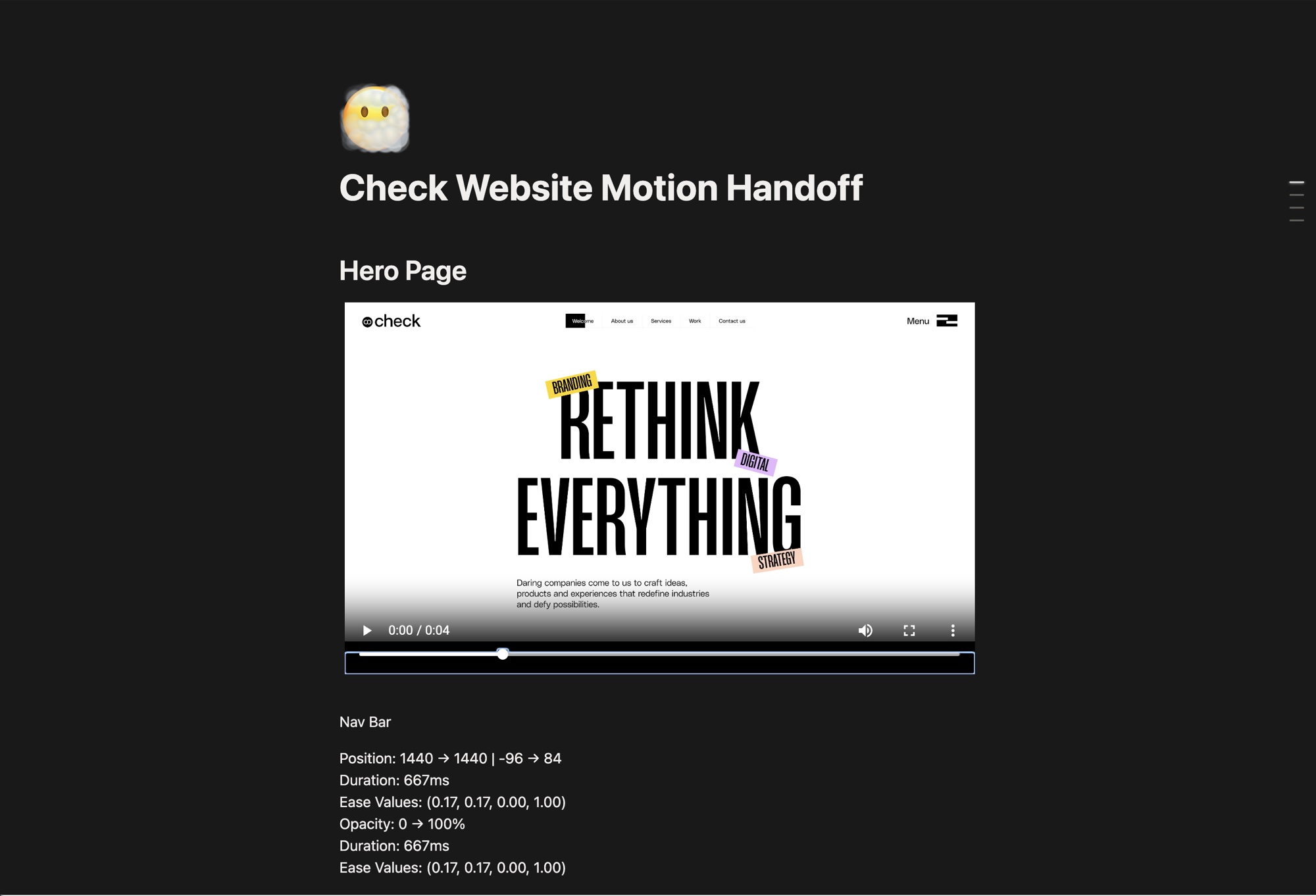
I walked them through four pieces. Two were motion specs, one for a website and one for a mobile app. The website one was for Check. I animated it in After Effects and handed it off in Notion, with the specs written next to GIFs and more examples hosted in Figma. My handoff has changed a lot since then. Now I build web prototypes that live on a page, which also makes each one a GitHub project. The page holds the motion specs themselves, down to the opacity, ease values, position and even rotation. Even in its Notion form, the Check spec made the animation our engineers shipped on the site a lot better, because they had the motion and the values in front of them instead of a video and a guess.
The hero section alone has eleven layers specced. The word “Rethink” flips up from -90° on the X axis over 734ms, and the menu opens in five masks that each start 125ms after the one before. Every value comes with its own ease curve, so nobody has to eyeball it.
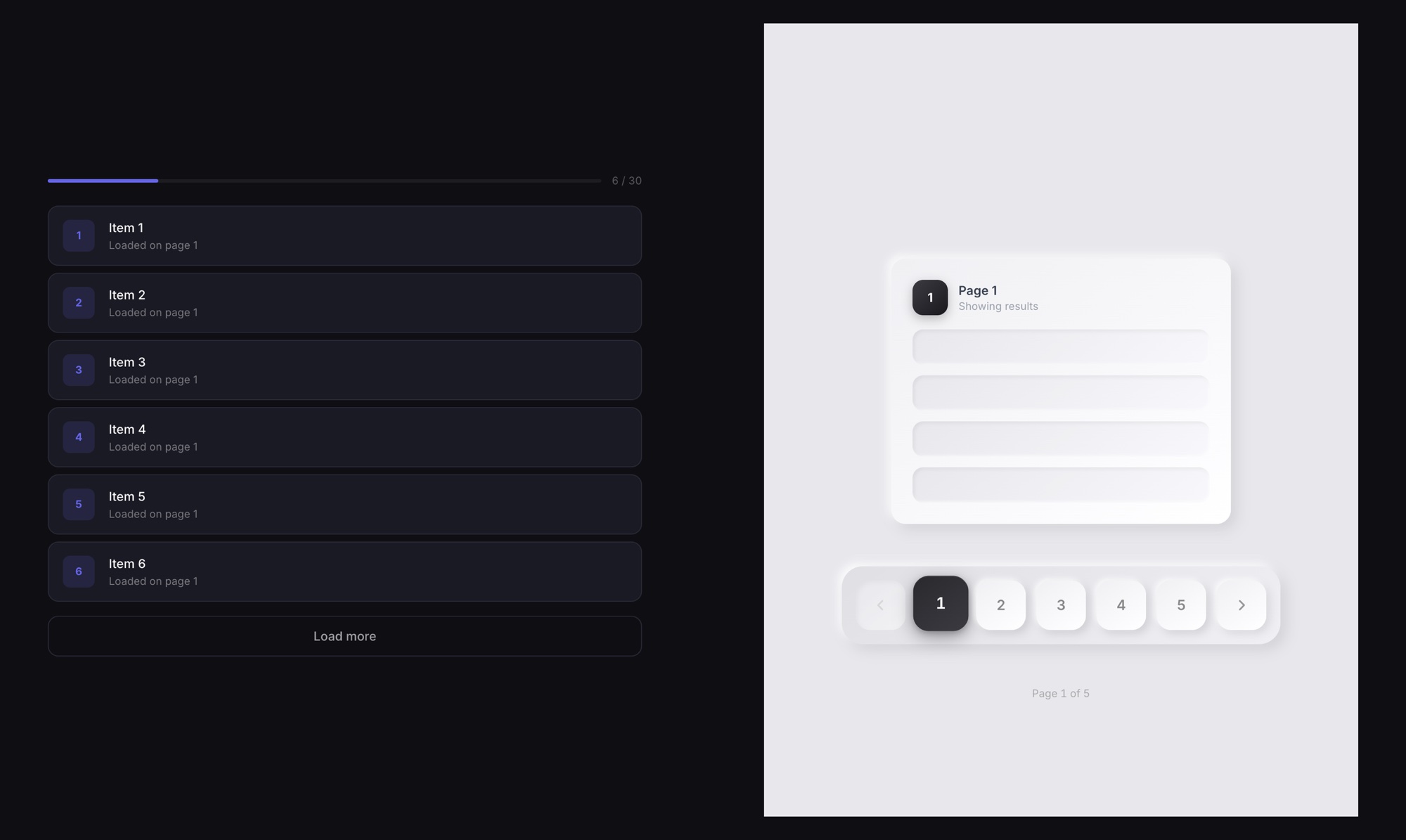
The other two were small interaction prototypes I built with Claude in React and Framer Motion. One is a continuous pagination pattern, where new items animate in as you scroll and a progress bar tracks where you are. The other is a numbered page selector with a spring on the active state and smooth transitions between pages. Both live in a small gallery on my site.
Working with AI
They also wanted to know how AI fits into how I work. They're an AI forward company, so I expected the question. My process has changed a lot over the last year. I use AI to get more design work out, and to build web and product prototypes that are good enough to show how an interaction should feel. What the design manager picked up on was that the output holds up because I understand what's underneath it. I studied computer science, so I can read the code to an extent and judge it, instead of taking whatever the AI gives me.
The other thing my past roles taught me is that one good animation on its own doesn't do much for a team. What helps is the system around it. For one client, the motion standards and specs we wrote covered both their brand and their product, so both followed the same rules. That's the kind of work that keeps paying off after the handoff.
Where it landed
We also talked honestly about where they are. Like every company, they have a backlog. What they'd like motion to do and what's actually on the product roadmap aren't the same list. I don't see that as a red flag, it's just what the job is. A founding motion designer spends most of their time shipping what the roadmap allows and making it good.
In the end we didn't land on compensation, and that's where it stopped.
I left the conversation thinking about the wider market. I don't think we'll see many roles like this one. Most companies will keep folding motion and interaction design into other roles, either design engineers or product designers. The skills still matter whatever the title ends up being. The questions this design manager asked are the ones I'd expect anywhere: can engineers build from your specs, and do you know the work well enough to judge what AI hands you?
I'd still stand by what I wrote in 2025 about interactions caring about the person using them. What I'd add now is that someone has to write that care down clearly enough for an engineer to build it.